8 Benefits of Preventive Maintenance for Commercial Buildings
Last Updated: November 17, 2026
Quick Summary
Preventive maintenance costs far less than fixing breakdowns after they happen, with planned maintenance running 60-80% less than emergency repairs. Preventive programs also cut operating expenses by 12-18% and deliver roughly 400% ROI on program spend. The savings come from small, predictable spending replacing large, unpredictable spending.
Preventive programs cost 25-30% less than reactive approaches, per Re-Leased's comparison.
Preventive maintenance cuts repair costs three to five times over emergency fixes, per TMA Systems.
Many programs break even on labor and parts within the first year.
Build your plan in four steps: inventory assets, rank by failure cost, set frequencies, assign responsibility.
Front-load inspections seasonally: cooling in spring, heating in fall, roofs before storm season.
Tired of emergency repair bills?
O & J Property Solutions LLC handles scheduled commercial maintenance and 24/7 emergencies.
Table of Contents
Why Preventive Maintenance Beats Emergency Repairs Every Time
Preventive maintenance is the practice of scheduling inspections, servicing, and repairs before equipment fails, and it costs far less than fixing breakdowns after they happen. According to Oxmaint's analysis of commercial maintenance costs, planned maintenance runs 60-80% less than emergency repairs.
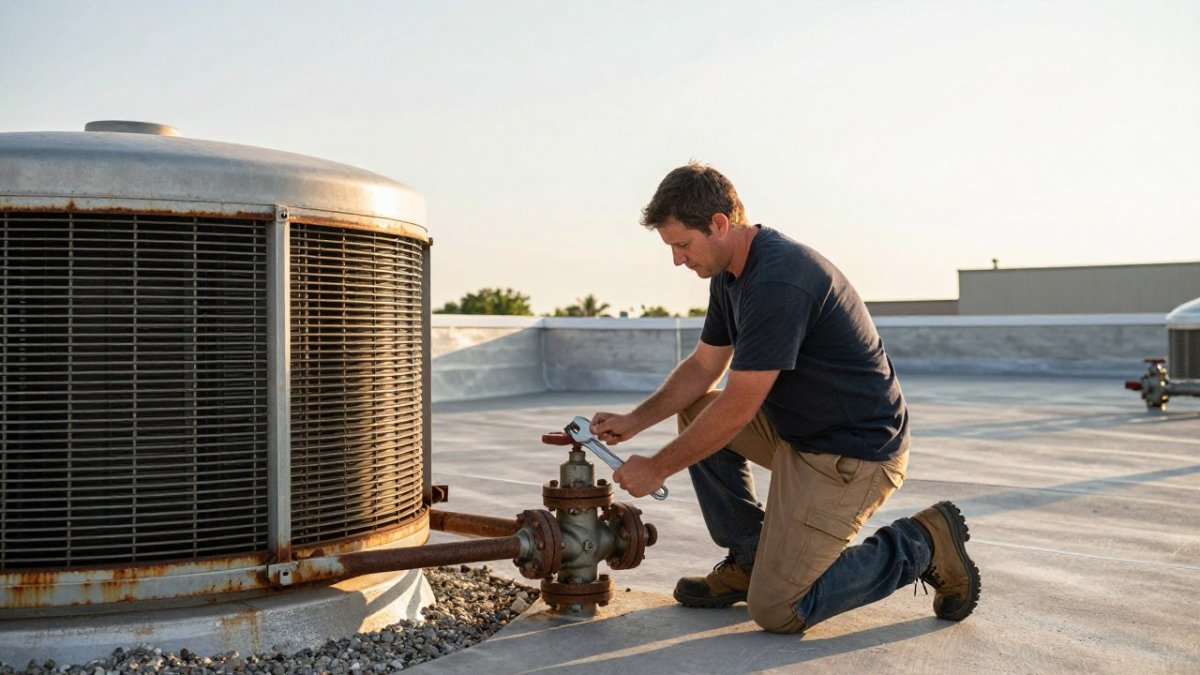
A rooftop HVAC unit serviced on schedule is a line item. The same unit failing at 2 a.m. in July is an overtime invoice, a lost tenant, and a weekend you don't get back.
Reactive maintenance feels cheaper because the bill arrives less often. It isn't cheaper. It's deferred.
Re-Leased's comparison of preventive and reactive maintenance found preventive programs cost 25-30% less than reactive approaches. The savings come from small, predictable spending replacing large, unpredictable spending.
The Cost Savings and ROI of Preventive Maintenance
The financial case is stronger than most property managers expect, but the headline percentages only mean something if you know where they come from. Re-Leased reports that preventive maintenance reduces operating expenses by 12-18% and delivers roughly 400% ROI on program spend. BGE Smart Energy's building operations guidance puts facility savings from preventive techniques in the same 12-18% range versus reactive maintenance. The range holds across building types, which tells you the mechanism is consistent, not luck.
Where does the money actually come from? Four places, and each one is trackable:
Fewer emergency premiums. No overtime rates, no rush shipping on parts, no after-hours dispatch minimums.
Smaller repairs. A worn belt gets replaced before it takes the motor with it, avoiding a much larger repair.
Longer asset life. Equipment that stays within spec lasts years longer, which pushes replacement CAPEX out and protects the reserve schedule.
Lower energy spend. Clean coils, correct refrigerant charge, and tight belts help keep equipment near its rated efficiency.
One honest caveat: the savings show up over months, not weeks. Budget for the first year before you judge the program.
How PM Data Feeds CAPEX and Reserve Planning
This is the part most benefit lists skip, and it's where the largest dollars sit. A preventive maintenance program generates a continuous record of asset condition, vibration readings, refrigerant pressures, belt wear, roof seam condition, panel temperatures. That record is the raw material for capital planning.
Property managers who run mature programs often replace equipment based on condition data rather than a fixed calendar, which can defer capital outlays and let the spend be timed to available reserves.
The practical framework is three tiers:
Deferred maintenance backlog. Items already past their service life that PM inspections flag as failing. These are the urgent CAPEX line.
Condition-based replacements. Assets trending toward failure over the next 24-36 months. PM data tells you which ones and when.
Lifecycle reserves. Assets performing to spec that need only scheduled funding. PM keeps them in this tier longer.
Watch out: a PM program that logs tasks but never rolls the findings into a capital plan leaves most of the ROI on the table, the repair savings are real, but the deferral value is larger.
The Payback Timeline, Honestly
Many maintenance programs reach break-even on labor and parts within the first year, with asset-life and capital-deferral benefits building over time. The first-year budget should assume some upfront cost: asset inventory, baseline inspections, and any catch-up repairs the first walkthrough uncovers. Those catch-up items are not a failure of the program, they are the deferred maintenance the program just made visible.
The article's financial claims break down into a handful of figures worth scanning.
Metric | Value | Source or note |
Planned vs emergency repair cost | 60-80% less | Oxmaint analysis |
Preventive vs reactive program cost | 25-30% less | Re-Leased comparison |
Operating expense reduction | 12-18% | Re-Leased; BGE Smart Energy agrees |
ROI on program spend | Roughly 400% | Re-Leased |
Repair cost cut vs emergency fixes | Three to five times | TMA Systems analysis |
Break-even on labor and parts | Within the first year | Many maintenance programs |
Condition-based replacement window | Next 24-36 months | Tier two of capital planning |
Longer Equipment Life and Fewer Unplanned Downtime Hours
Equipment longevity is where preventive maintenance pays back quietly. Industry guidance suggests that formal preventive maintenance programs can extend HVAC system lifespan.
MicroMain
Unplanned downtime hurts in ways the invoice doesn't capture. A dead walk-in cooler closes a restaurant kitchen. A failed air handler empties a leased floor for a day. Tenants remember that week longer than they remember the rent.
TMA Systems' analysis of maintenance benefits found preventive maintenance cuts repair costs three to five times over emergency fixes, once overtime and expedited parts are counted. For a deeper look at keeping air systems running, see our guide on how to reduce HVAC downtime in small commercial buildings.
Building Safety, Compliance, and Tenant Satisfaction
Safety and compliance are the benefits that don't appear on a P&L until something goes wrong. The U.S. General Services Administration's high-performance building guidance directs federal facilities toward preventive, predictive, and reliability-centered maintenance rather than reactive work. That's the federal standard, and it's a useful benchmark for private portfolios too.
Documented inspections matter here. A dated record of hood cleaning, electrical panel checks, and roof inspections is what you hand an insurer or a fire marshal. Without records, you're relying on memory, and memory doesn't hold up in an incident review or a coverage dispute.
Tenant Retention: The Revenue Side of Maintenance
Maintenance can also be a lease-renewal lever for a property manager. Tenant turnover carries real cost: vacancy loss during re-leasing, tenant improvements, leasing commissions, and the downtime between leases. A building that runs without surprises, stable temperatures, no water intrusion, no elevator outages, no after-hours alarms, keeps tenants through renewal season and avoids that stack of costs.
The mechanism is response time and predictability, not luxury. Tenants forgive a lot; they don't forgive repeated disruption. A PM program that catches a failing air handler before it takes a floor offline is a retention event, even though nobody files it that way.
The ESG and Sustainability Angle
This is where preventive maintenance connects to corporate reporting in a way most building owners haven't priced in. Some commercial tenants, particularly larger ones with public sustainability commitments, ask for building-level energy data as part of their own reporting. A PM program is the operational backbone of that data: equipment running at rated efficiency uses less energy, and documented maintenance supports the energy-use and emissions figures a tenant's sustainability team needs.
The practical link is energy. Dirty coils, low refrigerant charge, and slipping belts push equipment below rated efficiency, and that gap shows up in utility spend and in the building's emissions profile. Preventive maintenance keeps equipment near spec, which supports both the operating budget and any sustainability targets the owner or tenants have committed to.
Where Safety and Retention Meet
Water intrusion is the fastest way to lose tenant goodwill and the most common source of interior damage claims, so our step-by-step guide to preventing water damage in commercial buildings is worth reading alongside this one. The same logic applies to fire and life-safety systems: tested, logged, and current is the difference between a clean inspection and a citation, and between a tenant who renews and one who starts shopping.
Commercial Building Preventive Maintenance Checklist
A working checklist covers the systems that cause the most expensive failures. Start with these:
HVAC filters changed on schedule and belts inspected
Rooftop units checked for refrigerant charge and coil condition
Kitchen hood and duct cleaning logged with dates
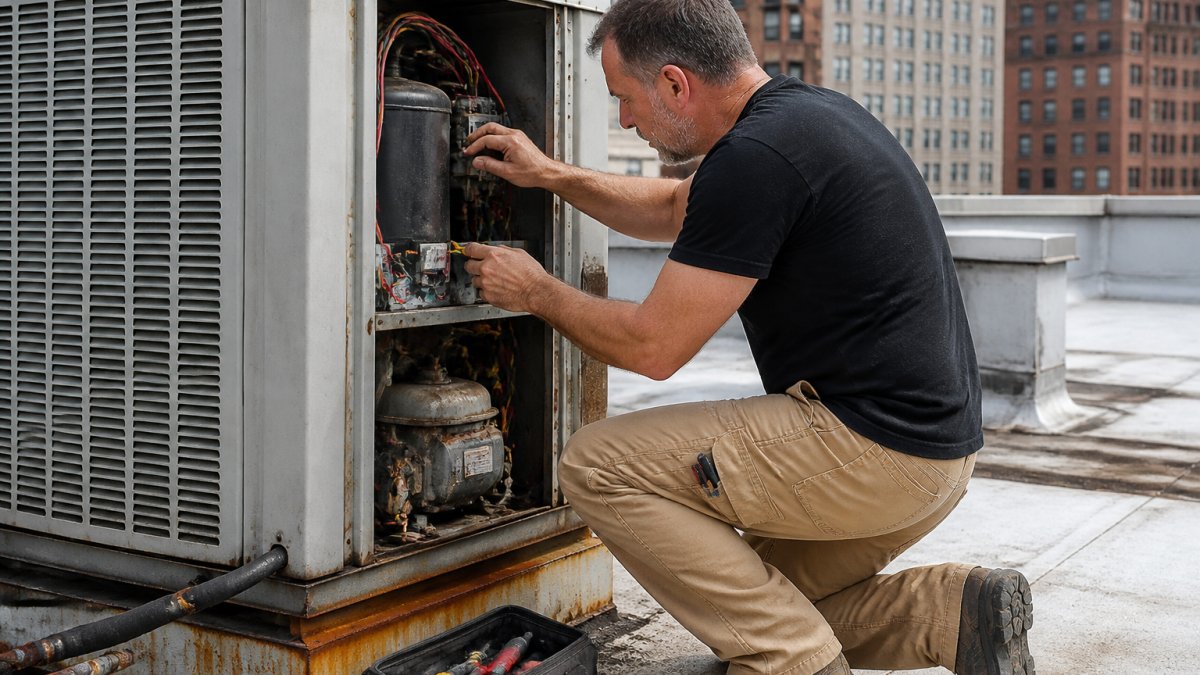
Electrical panels inspected for heat, corrosion, and loose connections
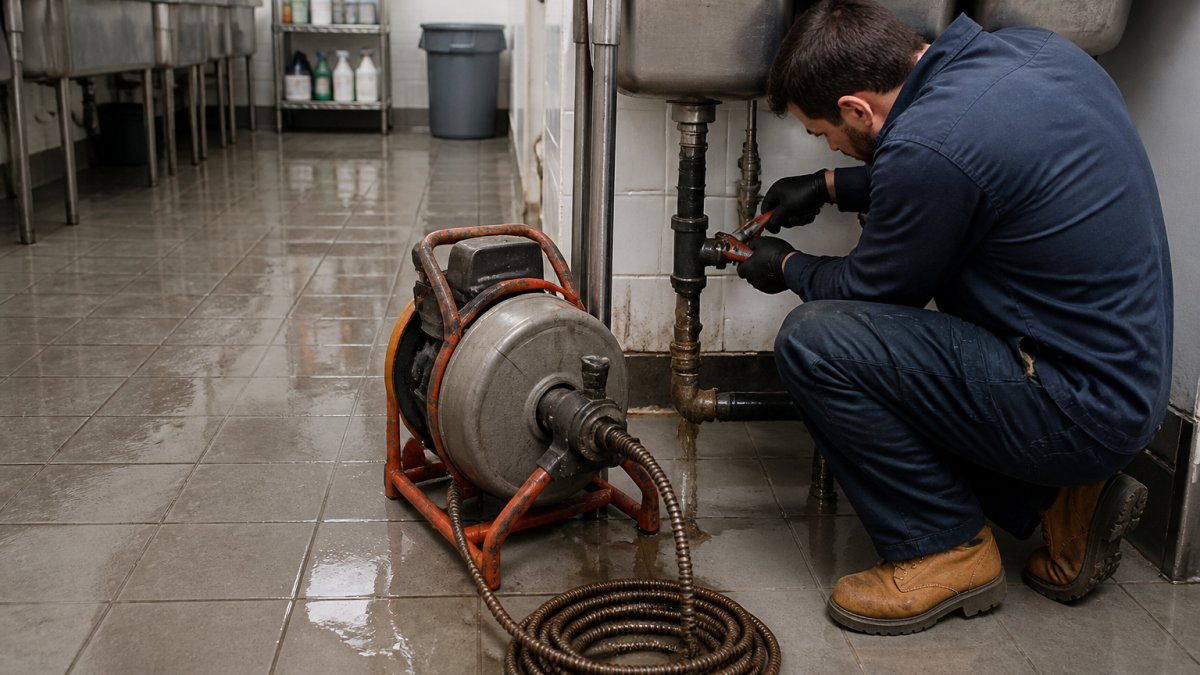
Plumbing checked for leaks, pressure issues, and drain flow
Roof and drainage cleared before storm season
Exterior and pressure washing scheduled
Fire and life-safety systems tested

Electrical deserves its own line because it's where older buildings hide problems. Our article on handling complex electrical systems in commercial buildings covers what a basic walkthrough misses.
Building a Preventive Maintenance Plan for Commercial Buildings
A preventive maintenance plan is a written schedule that assigns every critical asset an inspection frequency, an owner, and a record. Build it in four steps:
Inventory every asset. List HVAC units, panels, water heaters, hoods, and roofs with age and condition.
Rank by failure cost. A walk-in cooler outranks a hallway light. Prioritize what stops operations.
Set frequencies from manufacturer guidance. Not from habit or from what the last contractor did.
Assign responsibility and log everything. A schedule nobody records is a wish.
Property maintenance teams increasingly use Computerized Maintenance Management Systems to structure maintenance hierarchies and confirm tasks get done. A shared spreadsheet works for a single building. Past three or four, software earns its cost.
Launching a maintenance program often means reorganizing existing resources, so plan the staffing before the schedule.
You can review the commercial property services available and match them to your asset list.
Setting a Commercial Property Maintenance Schedule That Sticks
The schedule fails more often than the maintenance does. Three habits keep it alive:
Seasonal front-loading. Inspect cooling in spring, heating in fall, roofs before storm season.
One owner per task. Shared responsibility means nobody's responsible.
A monthly review. Fifteen minutes comparing completed tasks to planned tasks.
Preventive strategies only deliver their savings if the schedule is followed, not just written.
If you'd rather hand the schedule to a team that runs it, contact O & J Property Solutions LLC to set up ongoing preventive maintenance. Our licensed and insured team handles HVAC, electrical, and pressure washing services, with 24/7 emergency service available.
Real Preventive Maintenance Examples for Buildings
Three examples show what this looks like in practice.
A restaurant with a hood cleaning log. Regular hood and duct cleaning, documented each time, supports a clean maintenance record.
An office building on a filter calendar. Monthly filter changes on rooftop units keep refrigerant pressures stable. The building avoids the mid-August compressor failure that costs more than a year of filters.
A retail property with a pre-storm roof check. Clearing drains in early fall prevents ponding, and ponding is what finds every seam in an aging membrane.
None of these are dramatic. That's the point. Preventive maintenance is a series of small, boring tasks that prevent dramatic expenses.
Most commercial buildings don't fail because of one big mistake. They fail because small tasks went unscheduled for two years.
Frequently Asked Questions
What are the benefits of preventive maintenance for commercial buildings?
The biggest benefit is cost. Planned maintenance generally costs less than emergency repairs, and preventive maintenance can extend HVAC system lifespan and reduce operating expenses. Fewer breakdowns mean less unplanned downtime, safer buildings, and happier tenants.
What should a commercial building preventive maintenance checklist include?
A working checklist covers every critical system on a recurring timeline. HVAC filters and belts monthly, electrical panels and connections quarterly, plumbing and roof drains seasonally, and fire and life-safety devices on the schedule your local code requires. Add asset tags, inspection dates, and sign-offs so each task leaves a record. The checklist should also flag anything that needs a licensed contractor, such as complex electrical work.
How often should commercial building maintenance be performed?
Frequency depends on the system and how hard it works. High-traffic HVAC units need filter changes monthly and full inspections quarterly, while electrical and plumbing checks usually run quarterly to semi-annually. Roof, exterior, and pressure washing typically follow a seasonal schedule. Build your commercial property maintenance schedule around manufacturer specs and actual wear, not a generic calendar, and adjust after the first year of records.
What is the 80/20 rule in maintenance?
The 80/20 rule, or Pareto principle, holds that roughly 80% of breakdowns come from about 20% of your equipment. In practice, that means a small set of critical systems, usually HVAC, electrical, and plumbing, cause most emergency calls. Preventive maintenance works best when you identify that 20% first and put your inspection budget there before spreading resources across every asset in the building.
Comments